
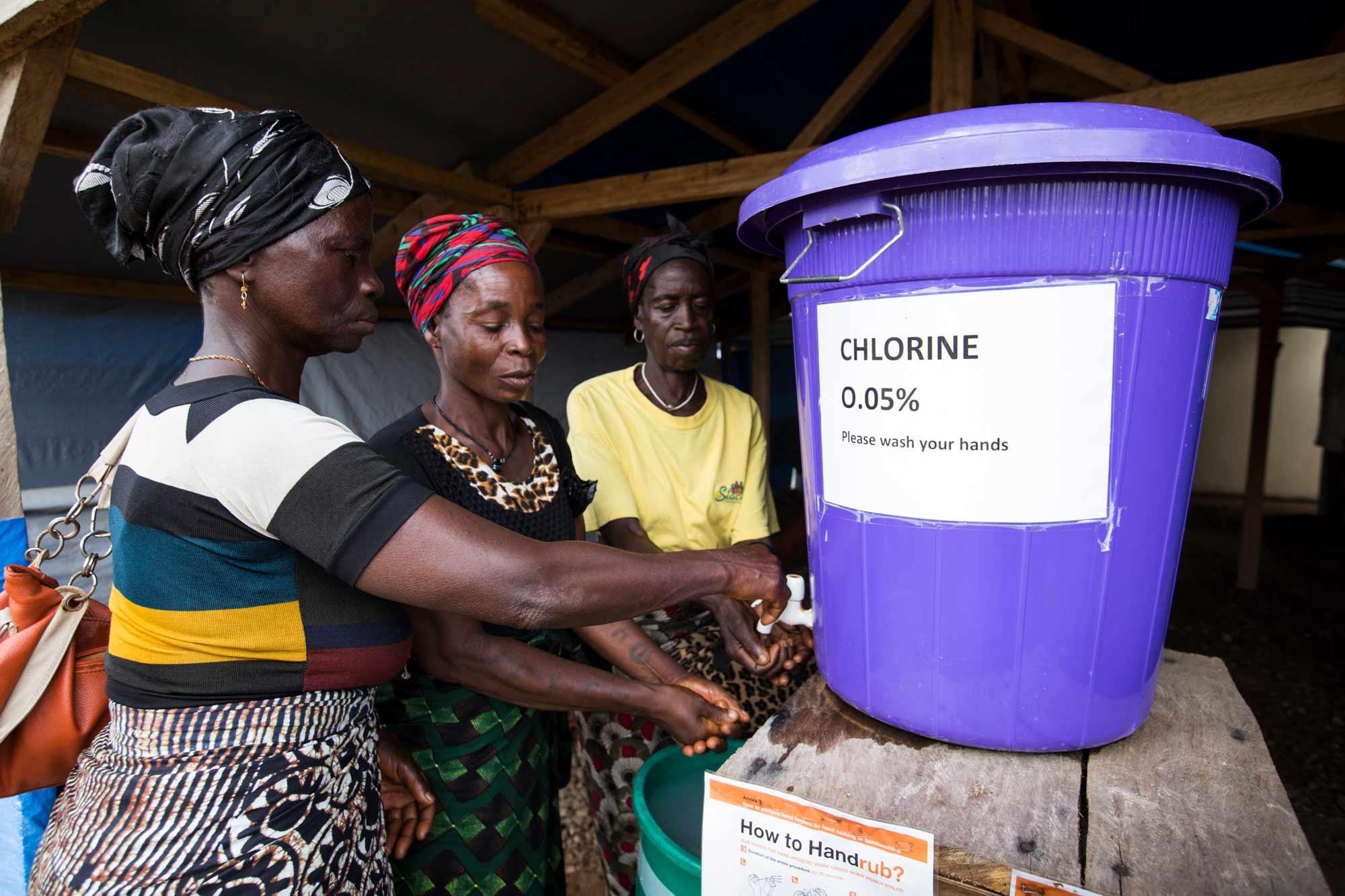
Women practicing hand washing (International Medical Corps)
Safe water, sanitation and hygiene (WASH) are essential to delivering safe and quality healthcare. Yet, many health facilities across Nigeria continue to face gaps in WASH services and infrastructure, creating risks for infection prevention, patient safety and quality of care. This piece explores the state of WASH in Nigeria’s health facilities, the challenges that persist, and what can be done to address them.
Data from the Multi-Source Data Analytics and Triangulation Platform (MSDAT) highlights the scale of the challenge. As of the latest available data, 9.1% of health facilities have no sanitation services, while only 26.5% have basic hygiene services. These figures point to important gaps that can directly affect the quality and safety of care.
Why WASH Indicators Matter
WASH encompasses access to water, sanitation, hand hygiene, healthcare waste management and environmental cleaning. According to the World Health Organization (WHO), functioning WASH services are crucial for preventing infections, reducing antimicrobial resistance and supporting safe, quality care, including maternal and newborn health.
A health facility without adequate water and sanitation may struggle to maintain clean wards, wash hands, clean equipment and provide a safe environment for patients. Similarly, inadequate or unclean toilets can compromise patient dignity and increase the risk of environmental contamination.
These challenges are particularly important in maternity and newborn care, where poor hygiene and sanitation can increase the risk of infections among mothers and newborns.
What the Data Tells Us
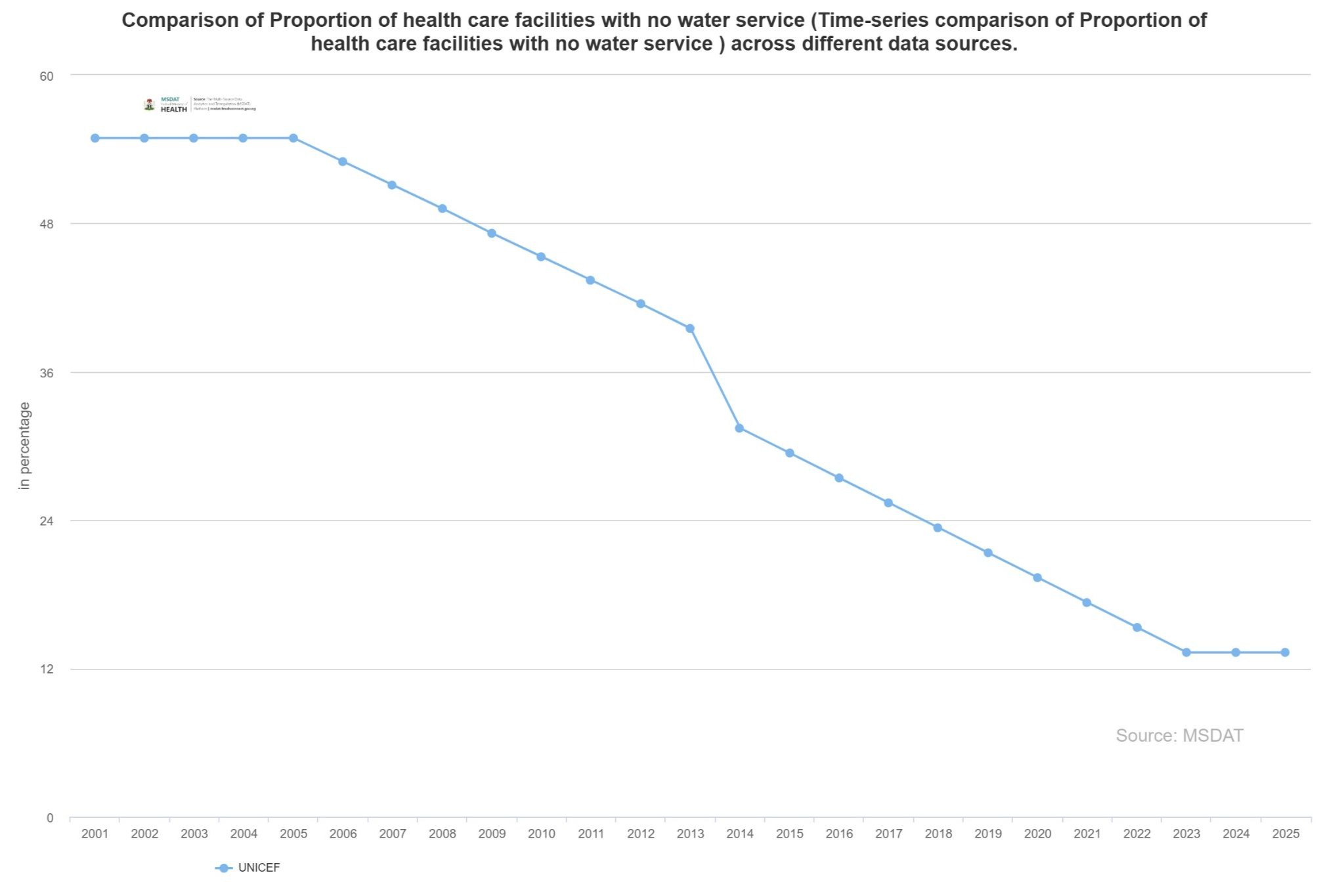
Proportion of health facilities with no water services (MSDAT)
MSDAT data also shows areas of progress alongside persistent gaps. The proportion of health facilities with no water services declined from 26.1% in 2020 to 20.3% in 2025, representing an encouraging improvement. There has also been an increase in the proportion of facilities with handwashing capacity.
However, progress has not been uniform. The proportion of facilities with no hygiene services increased by 2.5 percentage points between 2020 and 2023. This suggests that while access to some WASH services is improving, significant gaps remain.
Proportion of health facilities with no hygiene services (MSDAT)
These indicators matter because WASH deficiencies can affect not only infection prevention but also the efficiency and reliability of service delivery. Facilities dealing with inadequate water, sanitation or waste management may face additional operational challenges, while poor facility conditions can influence patients’ confidence in the healthcare system.
Turning Data into Action
This article has shown that there is a serious need to improve the WASH infrastructure across Nigerian health facilities. Reliable WASH data can help health managers and policymakers identify facilities and areas requiring attention, prioritize investments and track progress over time.
MSDAT provides access to key WASH indicators, including basic sanitation services, water services, handwashing facilities and healthcare waste management. By bringing these indicators together, it enables users to explore trends and compare health facility performance across different periods.
Improving WASH should be viewed as more than an infrastructure investment. It is an investment in healthcare quality, patient safety and stronger health systems. For Nigeria to achieve safer and more dignified healthcare facilities, decision-makers need both the resources to address WASH gaps and the data to understand where those gaps exist. Explore more WASH indicators on MSDAT, you can examine the trends and identify where action is most needed.
