
A newborn with Healthcare personnel © Dominic Chavez/ World Bank
A baby is born. The delivery is over. The mother is recovering. For many families, this feels like the moment when the most difficult part is behind them.
But medically, the story is far from over.
The first hours, days and weeks after childbirth are a critical period for both mother and newborn. WHO describes the first six weeks after birth as an important window for preventing complications, supporting recovery and promoting the health and wellbeing of both.
So, how well are Nigerian mothers and babies being followed up after delivery?
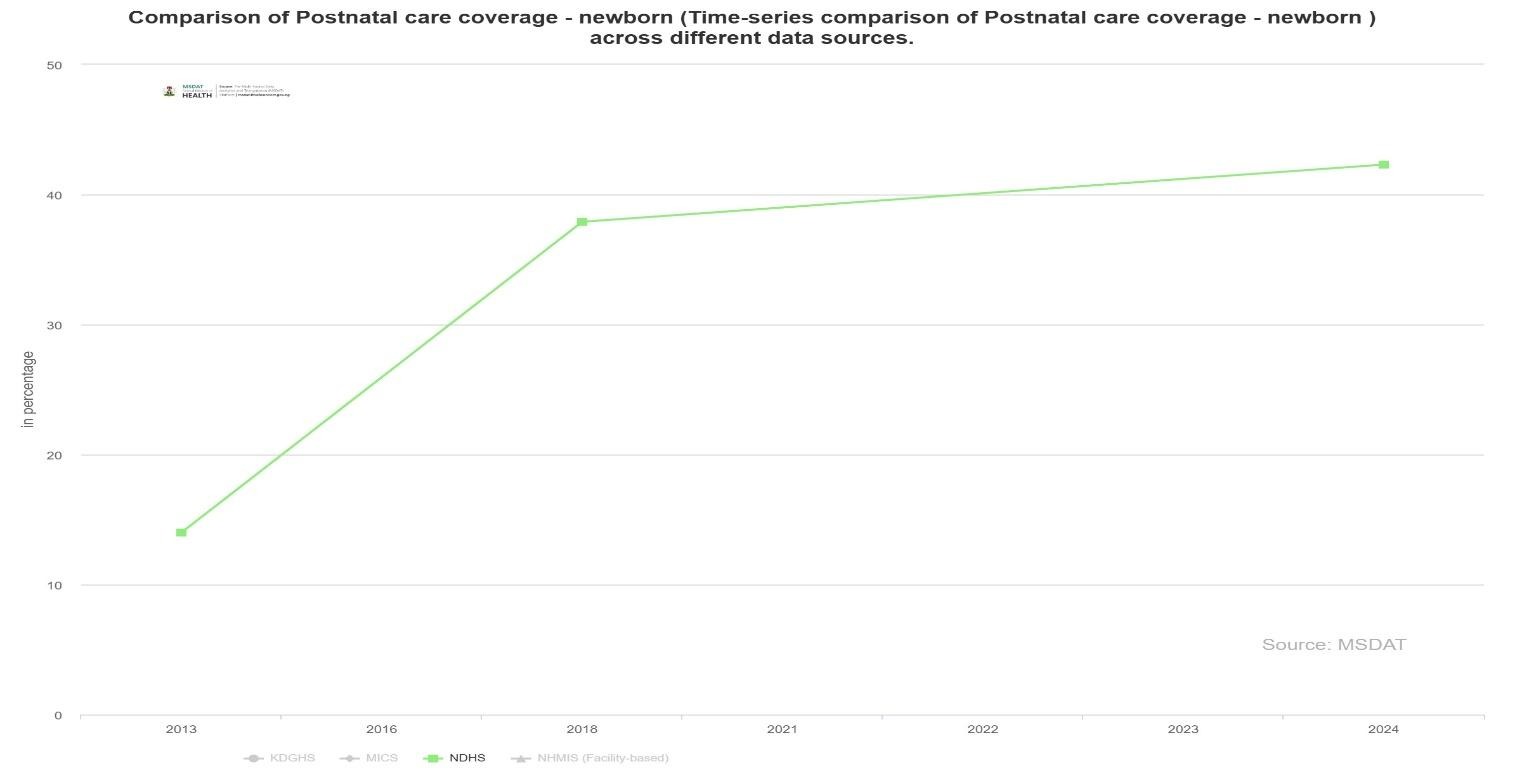
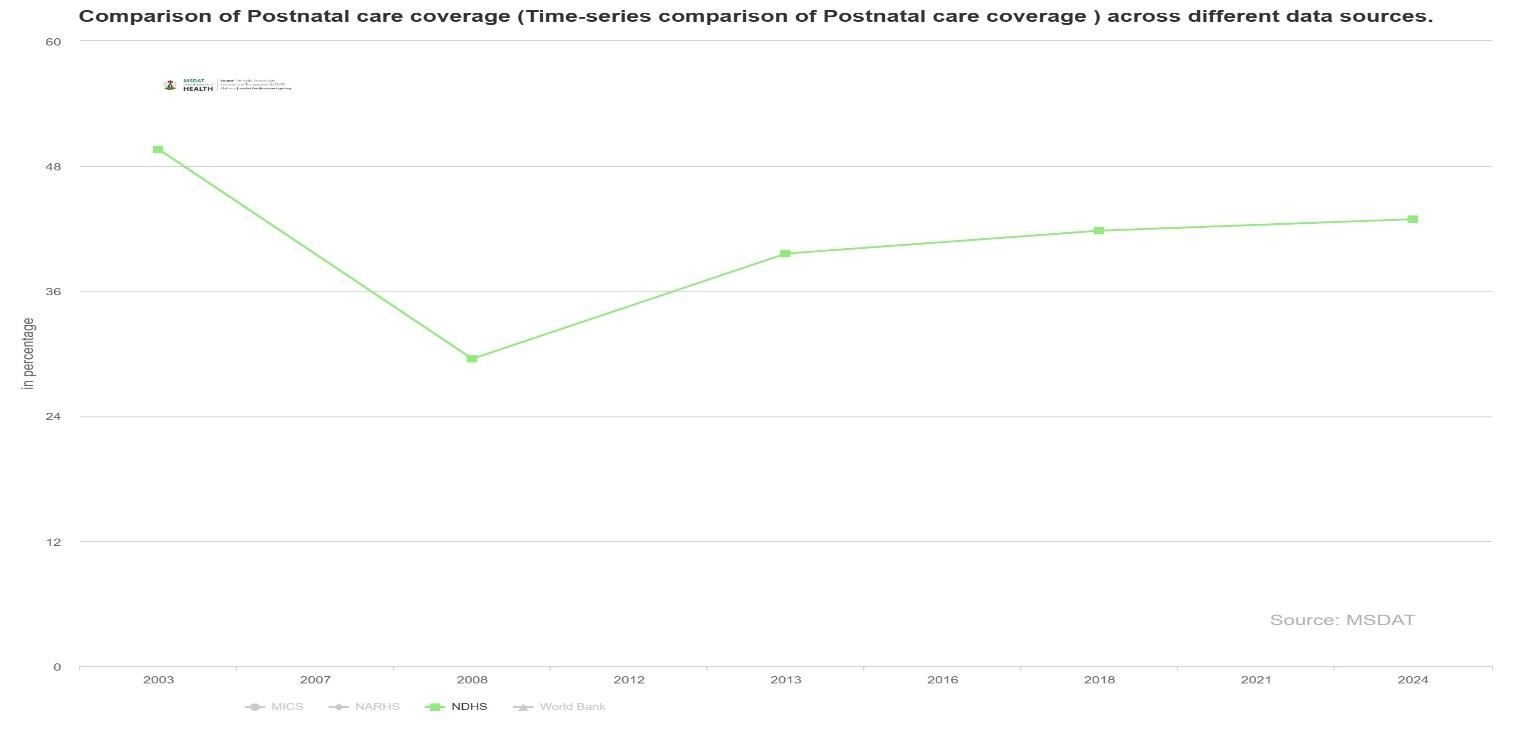
The latest NDHS data on the multisource data analytics and triangulation platform (MSDAT) shows that only 43% of women received a postnatal check within two days of delivery. For newborns, the figure was 42%; 58% did not receive a postnatal check within the first week of life.
These numbers suggest that getting through childbirth is only part of the challenge for the health system. Although postnatal care has improved over time, ensuring that mothers and babies receive timely care after delivery remains a significant gap.
The Geographical Gap
There is a clear difference in postnatal care coverage between states across Nigeria. For mothers, Lagos has the highest coverage at 87.3%, while Kebbi with 11.3% has the lowest. The pattern is also true for newborns. Edo (87.6%) has the highest coverage, while Sokoto (10.2%), Kebbi has the lowest coverage.
The size of these differences highlights the importance of targeted strategies in states with the largest gaps, particularly across parts of northern Nigeria.
Education, residence and wealth matter
Where a mother lives and her socioeconomic circumstances can also shape her access to postnatal care.
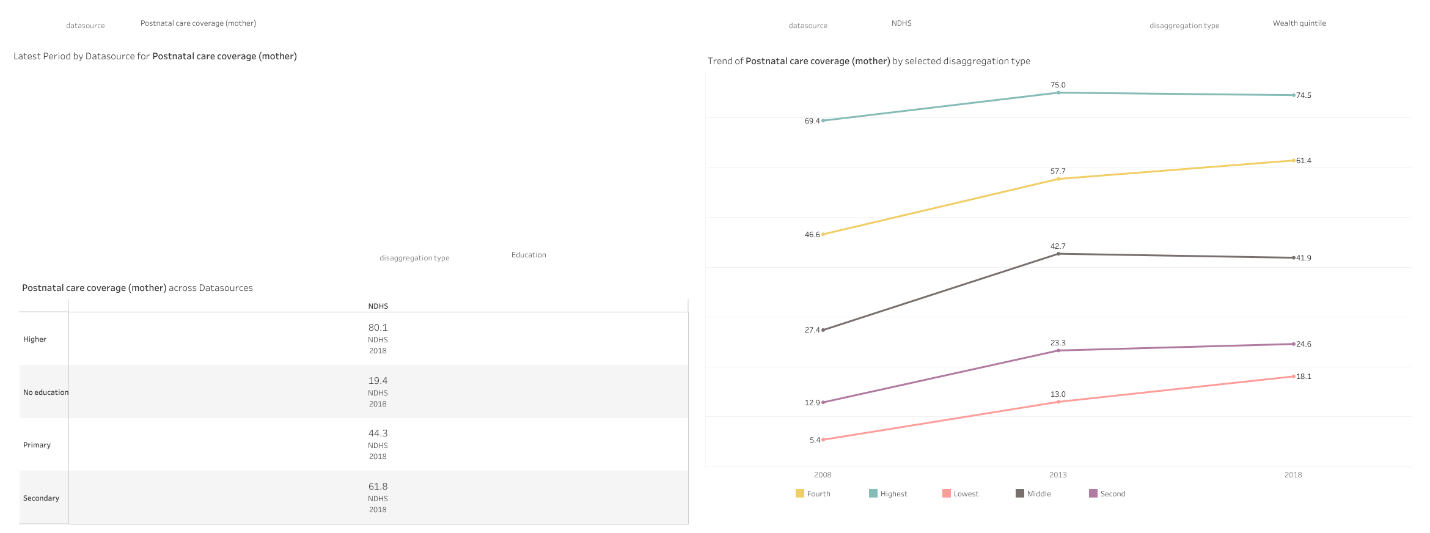
These disparities are not new. Historical NDHS data from 2018 showed a substantial difference in maternal postnatal care by education: 80.1% of women with higher education received postnatal care, compared with 19.4% of women with no education.
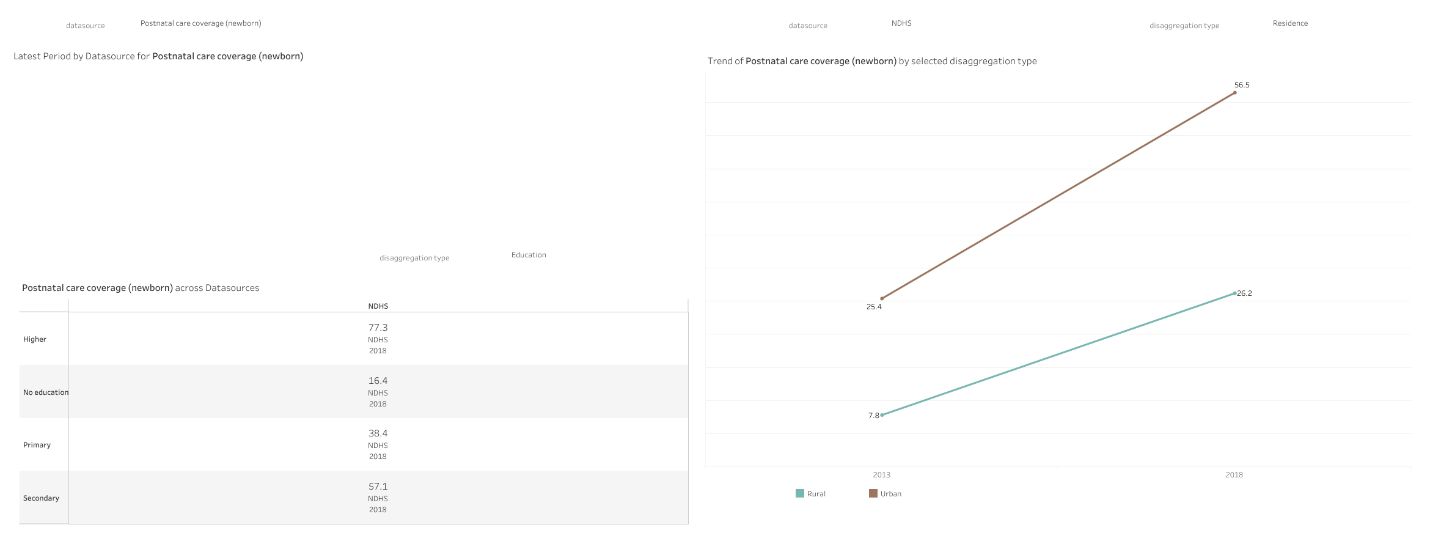
A similar pattern was observed among newborns. In 2018, 77.3% of children born to women with higher education received postnatal care, compared with 16.4% of children whose mothers had no education. Newborns in urban areas were also more likely to receive postnatal care than those in rural areas.
These differences point to a broader health-system challenge. Improving postnatal care is not simply about increasing the national percentage. It is also about understanding which women and newborns are being left behind, where they are located and what barriers they face.
From numbers to better decisions
Through MSDAT, we are able to see that there are improvements in postnatal care for women and newborns; but there is still a long way to go.
Instead of asking only, “What is Nigeria’s postnatal care coverage?”, decision-makers can ask more useful questions: Where are the gaps largest? Are some populations consistently underserved? Is coverage improving? And are mothers and newborns receiving the care they need when they are reached?
These are the questions that can turn health data into action.
Improving postnatal care will require more than ensuring that mothers and babies return to a health facility. It means reaching them at the right time, providing appropriate care and using data to understand where the system is falling short.
Explore postnatal care and other maternal and child health indicators on MSDAT to see where Nigeria is making progress, where gaps remain and which populations may need greater attention.

