


Introduction:
At the 2025 Joint Annual Review (JAR), Nigeria marked a significant milestone in its digital health transformation with the official launch of MSDAT (Multi-Source Data Analysis and Triangulation). MSDAT is a data analysis and triangulation platform developed by eHealth4everyone for the Federal Ministry of Health. Muhammad Ali Pate unveiled it during the National Joint Annual Review Conference in his capacity as the Coordinating Minister of Health and Social Welfare.
The Federal Ministry of Health and Social Welfare held the conference from November 12 to 14, 2025. It featured an exhibition where the MSDAT project manager, Ummi Abdulsalam briefly presented the MSDAT platform in a one-on-one meeting with the minister. It also hosted a panel where the Director of Monitoring and Evaluation at the Federal Ministry of Health, expressed his joy at the launch of the Multi-Source Data Analysis and Triangulation Database.
Accurate and timely data is the backbone of effective healthcare delivery worldwide. Yet poor data quality remains a reason for preventable deaths and patient harm. The MSDAT platform was created to close this gap and bridge Nigeria’s data divide. MSDAT aggregates health information from multiple sources, resolving fragmentation and elevating data quality through strict validation and harmonization.
eHealth4everyone celebrates this milestone as the minister fully endorsed the MSDAT at the National Health Sector Joint Annual Review. Representatives from state ministries, development partners, health agencies, and technical teams witnessed the unveiling, signaling unified support for tools that advance universal health coverage and commitment to the Sector-Wide Approach (SWAp) and the NHSRII goal of Universal Health Coverage.
What is MSDAT:
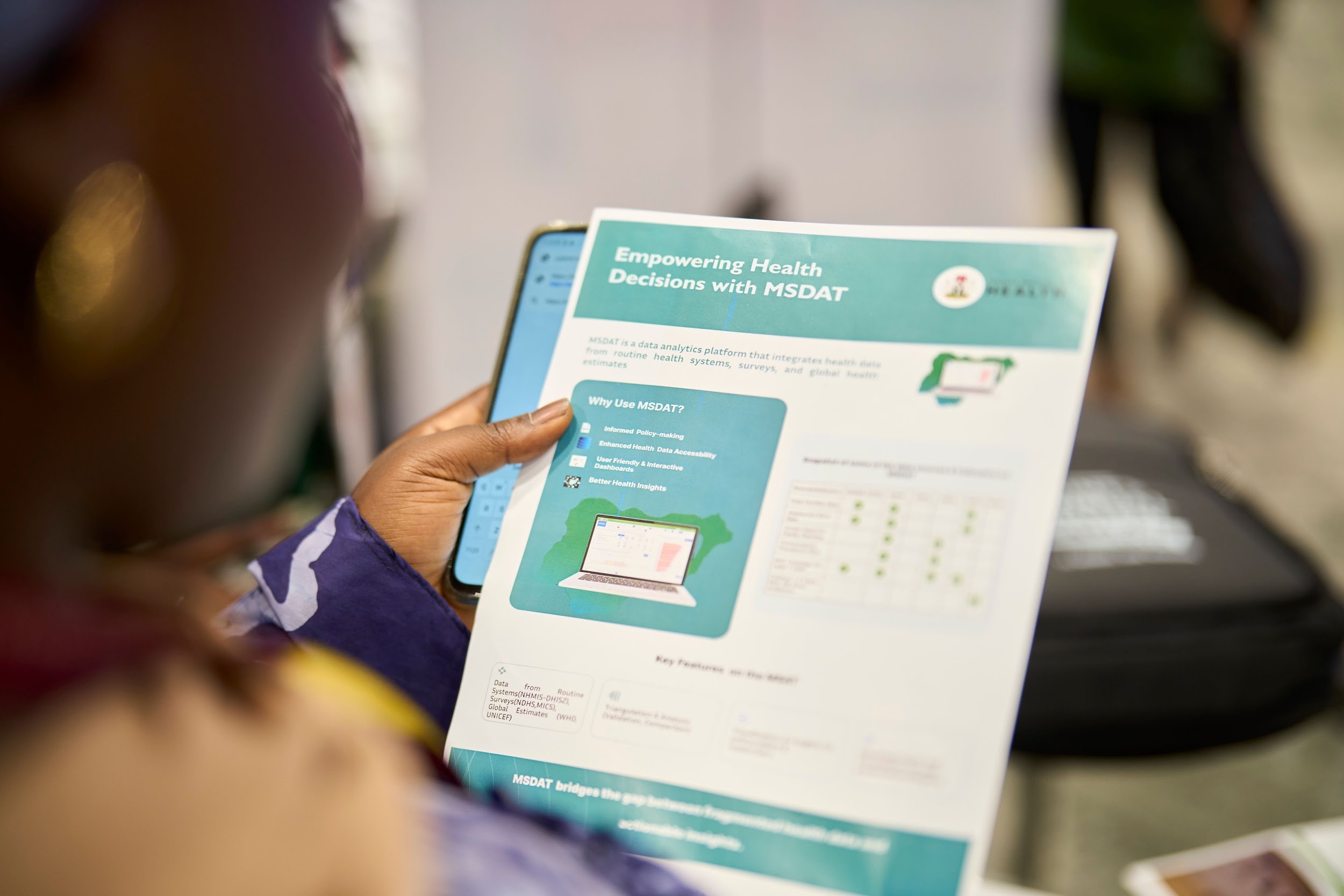
MSDAT (Multi-Source Data Analysis and Triangulation) is an innovative health data analytics platform designed to integrate data from multiple national and global sources of health information into one unified dashboard.
What MSDAT Does:
Owing to its incorporation of edge-cutting and innovative digital tools like triangulation and multiple data sources, MSDAT can be used for a variety of beneficial causes, including:
- Unifies Health Data: Aggregates information from major routine sources like NHIMS-DHIS2; survey sources like NDHS, NNHS, NMIS, NARHS and MICS; and Global estimates like WHO-GHO, UNICEF and the World Bank into one reliable platform.
- Improves Data Quality: Validates, cleans and harmonizes datasets to eliminate inconsistencies and errors.
- Enables Evidence-Based Decisions: Converts raw data into clear insights for planning, budgeting, monitoring, and policy formulation.
- Provides Powerful Analytics: Offers tools such as indicator comparison, indicators like immunization, RMNACH, Skilled Birth Attendance, zonal analysis, disaggregation, and data source comparison.
- Supports Programs Dashboards: Features specialized dashboards for Health Outcomes, Health Finance, Health Workforce, Governance, and more.
- Enhances Accessibility: Gives policymakers, program managers, researchers, and partners a single trusted destination for credible health data in Nigeria.
Brief History of MSDAT:
MSDAT was first created in 2017 by eHealth4everyone for the Federal Ministry of Health and has since then been used by various departments for extracting data and for research purposes. It was initially known as the Centralized Analytics Repository (CAR). This platform has long supported the Ministry of Health and other organizations in making well-informed health choices that serve the patients.
The Department of Health Planning and Statistics of the Federal Ministry of Health has long been using the platform for its data collection and analysis for the administration of the ministry.
eHealth4Everyone created MSDAT in response to a persistent problem: Nigeria had plenty of health data, but no unified tool to analyze, compare, and validate it.
Over the years, the platform was tested through:
- Tool reviews
- state-level performance assessments
- national analytic exercises
- partner-supported evaluation
Its value quickly became clear, culminating in the platform’s official national launch at the 2025 JAR.
Minister’s Official Launch of MSDAT:
The first highlight of the MSDAT launch was an official walkthrough featuring an exhibition and showcases where ehealth4everyone presented the MSDAT to the Minister and his executives. This took place on the 13th of November, 2025. The minister was impressed with the innovation and gave a thumbs-up to indicate his sponsorship of this tool.
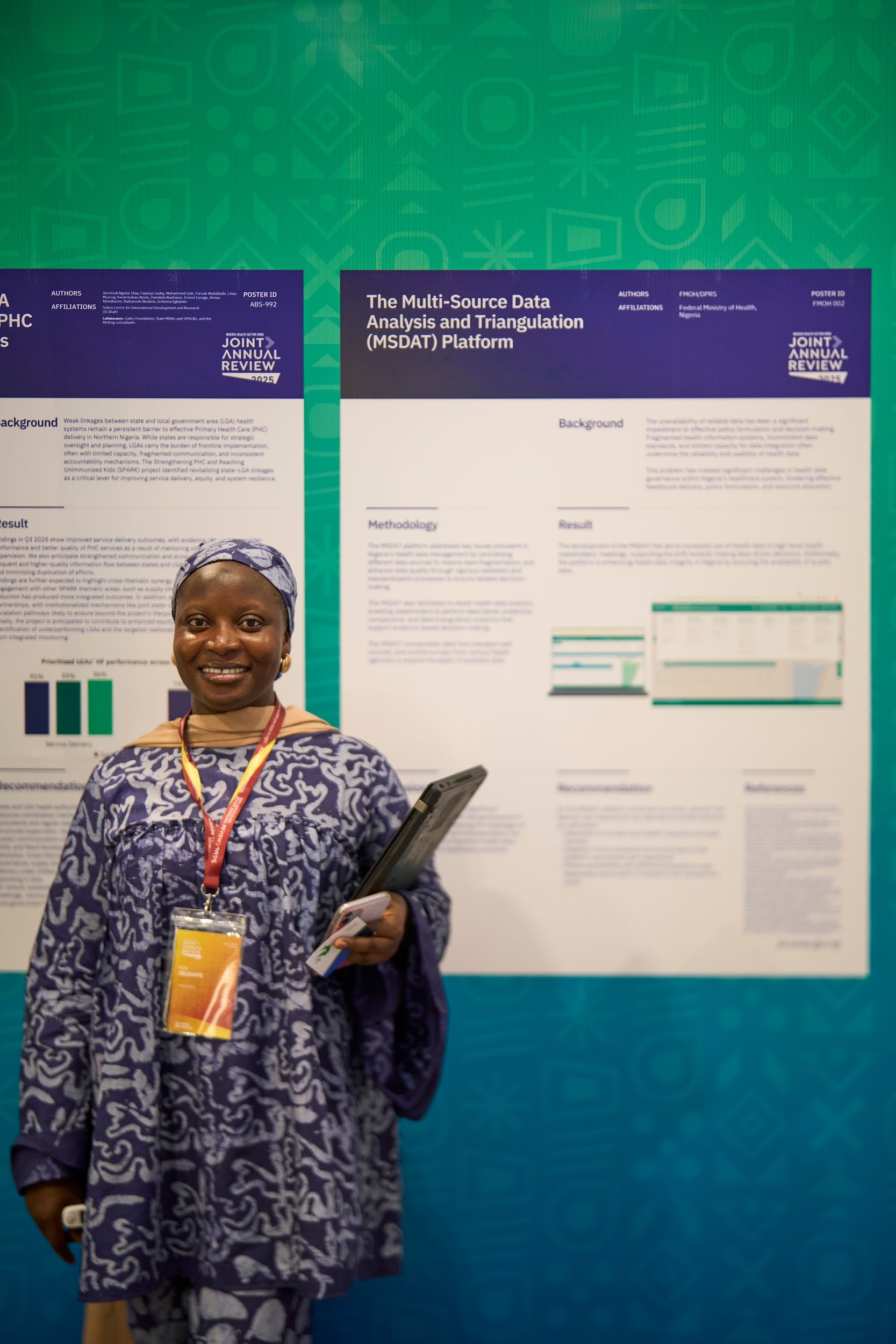
On the final day of the review, the 14th of November, eHealth4everyone, supporting ministries and agencies and everyone in attendance of the JAR witnessed the official launching of the MSDAT platform.
A panel made up of key stakeholders introduced their products using detailed reports. This report portrayed the significance of their products and their long-term benefits in the health landscape.
Dr Anthony Adoghe, the Director of Monitoring and Evaluation in FMoH, represented eHealth4everyone and introduced MSDAT to all delegates present.
He accentuated the product as the answer to Nigeria’s age-old data problem. The Director had worked with eHealth4everyone over the years in the development and standardization of the Data Analysis and Triangulation platform. He expressed his satisfaction with the launch and the national spotlight the product was getting from the minister and all delegates present.
During the launch, the Minister emphasized the need for reliable, unified, and transparent data to guide Nigeria’s health planning and resource allocation. MSDAT was spotlighted as a national tool capable of solving long-standing challenges.
Stakeholders from federal and state governments, development partners, private sector players, traditional leaders, International representatives and civil society all witnessed the official endorsement of MSDAT, positioning it as a central component of Nigeria’s emerging digital health ecosystem.
The Significance of the MSDAT Launch:
The official launch of the Multi-Source Data Analytics and Triangulation (MSDAT) platform at the 2025 Joint Annual Review (JAR) SWAp conference marks a major milestone for Nigeria’s health sector. With endorsement from the FMoH, MSDAT has evolved from a technical innovation into a government-backed national asset.
For the first time, Nigeria has a trusted and unified platform for harmonized and validated health data. Federal agencies, state governments, policymakers, program managers, researchers, and development partners can now rely on this platform for accurate data.
Government backing positions MSDAT as a key tool for national health planning. It can support policy formulation, guide resource allocation, strengthen performance reviews, and improve sector-wide monitoring.
What the MSDAT Launch Means for Nigeria:
- Policy and strategic planning: Ministries and agencies can now base national health strategies on standardized, multi-source indicators.
- State-level decision-making: States can benchmark performance, monitor trends, and identify intervention gaps using a unified source of truth.
- Resource allocation: Funding and prioritization decisions can now be driven by credible evidence rather than fragmented data.
- Program implementation: Program managers gain reliable, real-time insights to improve performance, report accurately, and adjust interventions.
- Research and evaluation: Academics and analysts have access to a single, validated repository of multi-source health data.
- Transparency and accountability: Public dashboards and validated indicators increase visibility for citizens, oversight bodies, and partners.
The launch of MSDAT signals a new era of coordinated, transparent, and data-driven health governance in Nigeria. It reflects the government’s commitment to using high-quality data to guide decisions, strengthen health systems, and ensure that progress is measured with clarity and accuracy. It also highlights eHealth4everyone as a significant nationwide digital health organization.

Key Features of MSDAT:
By unifying multiple national and global datasets, MSDAT gives the health sector a single source of truth for planning, policy and lifesaving decision-making.
Its key features include:
- Unified Multi-Source Data Integration: eHealth4everyone collected data from multiple authorized and credible sources to power the MSDAT platform. Monthly NHMIS–DHIS2 and facility-based NHMIS–DHIS2 feeds provided real-time routine service data. Periodic national surveys such as the NDHS, NNHS, NARHS, MICS, and NMIS offered detailed population-level insights. Global institutions such as the Institute for Health Metrics and Evaluation, the World Bank, and the World Health Organization Global Health Observatory provide estimates that track Nigeria’s progress toward key targets.
- Indicator Overview : MSDAT offers a clear snapshot of key health metrics like SBA, Maternal mortality and Immunization across Nigeria. Users can instantly see performance, coverage and gaps all in one place.
- Zonal Analysis : The platform allows comparison across all six geopolitical zones, making it easier to identify regional disparities and track progress at every level of the health system.
- Indicator and Source Comparison: MSDAT highlights variations between multiple data sources at a glance. This strengthens data quality, improves transparency and helps stakeholders understand exactly where discrepancies exist.
- Deep Disaggregation : Users can break data down by state, age, sex and other critical variables, supporting equity-focused planning and evidence-based decisions.
- Program-Specific Dashboards: The platform provides dedicated dashboards for every major health area, including Health Outcomes, Health Finance, Health Workforce and Governance. These visuals enable deeper exploration, triangulation and trend analysis across priority programs.
- Advanced Analytical Tools: Stakeholders can perform triangulation using the different indicators and data sources for trend analysis and comparative analytics right inside the platform. MSDAT turns raw data into clear, actionable insights that drive timely interventions.
- Free and Open Access : Every health professional in Nigeria can use MSDAT at no cost, ensuring credible, harmonised data is available to everyone working to strengthen our health system.
Who can use MSDAT:
The platform is built for multiple levels and actors in Nigeria’s health ecosystem, including:
- Federal Ministry of Health
- Federal Government
- State Ministries of Health
- LGA health departments
- Immunization and RMNCH programs
- Donors and development partners Researchers and academics
- Civil society organizations
- Private health innovators
MSDAT’s simplicity makes it accessible to both technical and non-technical users.
Why MSDAT is Critical for Nigeria Right Now:
Nigeria’s health sector is currently undergoing major reforms: PHC revitalization, health insurance expansion, digital transformation, and improved accountability under BHCPF.
MSDAT supports these reforms by:
- Improving the accuracy of health sector performance reviews.
- Strengthening accountability through data visibility.
- Enabling better resource allocation.
- Reducing fragmentation across multiple platforms.
- Supporting SWAp’s “One Data” principle
- Helping states and LGAs track progress in real time
As Nigeria moves toward a more unified health information system, MSDAT is central to planning and resource allocation.
Stakeholder Reception:
Government officials and partners praised MSDAT for:
- Simplifying data access
- Supporting transparency
- Strengthening strategic planning
- Reducing inconsistencies between administrative and survey data
- Improving state-level performance tracking
Testimonials From Current User:
Caleb Aromeh, a Technical Adviser to the Governor of Benue State, has been an active user of MSDAT for more than six years. He first discovered MSDAT during a FMoH partner meeting in 2018. He recognized its potential to address key challenges in health data management. Particularly scattered data sources and the difficulty of navigating traditional systems.
According to Caleb, MSDAT has significantly transformed the way he works with health data. By integrating routine data, surveys and global estimates into a single, easy-to-navigate platform. MSDAT has enabled him to access comprehensive visualizations that support better decision-making. He describes the platform as “excellent” and highlights its simplicity and holistic data view as major strengths.
Caleb is also an enthusiastic advocate for MSDAT, recommending it widely across his professional network. With no suggestions for improvement, he notes that the platform already meets his needs effectively.
Conclusion:
The official launch of MSDAT Nigeria marks a new era of data-driven decision-making. it strengthens the government’s commitment to accountability, transparency and performance. It spotlights MSDAT as a national tool and eHealth4everyone as a federal-level digital health company.
As the country continues to push for resilient health systems, MSDAT stands as an important digital innovation supporting Nigeria’s health future.

